





HubSpot offers a complete and intuitive CMS that lets you build, manage, and optimize websites without being dependent on IT for every change. The key difference compared to many other CMS platforms? HubSpot combines website, CRM, and marketing in one single platform. That means you are not just managing design, but actively steering growth. In this article, you will learn what HubSpot CMS (now called Content Hub) is, what you can do with it, when it is a smart choice, and how to get the most out of it. Ready to get practical right away? Take a look at our HubSpot websites page or plan a free website audit.
Table of contents
- What is HubSpot CMS (Content Hub)?
- Why choose HubSpot CMS?
- HubSpot CMS vs WordPress: what is the difference?
- HubSpot CMS training: full control for your team
- When should you involve a HubSpot website agency?
- HubSpot CMS pricing and licenses
- Frequently asked questions about HubSpot CMS
What is HubSpot CMS?
HubSpot CMS is HubSpot’s content management system that allows you to build, manage, and optimize websites and landing pages. It is designed for teams that need speed and flexibility. Marketers can create and adjust pages without long development cycles, while still working with consistent templates, modules, and governance.
Since HubSpot expanded its product offering, the CMS is now part of Content Hub. You can think of Content Hub as “HubSpot CMS plus.” In addition to website functionality, it includes advanced content management, personalization, and depending on your license, AI-powered tools and content features.
In short:
HubSpot CMS = building and managing websites
Content Hub = CMS plus advanced content features for scalability and growth
Why choose a website built with HubSpot CMS?
HubSpot CMS is more than a place to publish pages. It is a growth platform. You build your website in direct alignment with marketing, sales, and data. That is exactly where many organizations struggle today with disconnected tools, limited insights, and too much manual work.
HubSpot stands out in the following areas:
1. Marketing independence
You build pages using drag and drop, work with reusable modules, and manage content quickly. Small changes no longer require development tickets but become part of your daily workflow.
2. Intuitive user experience
HubSpot is designed to be easy to use. You see exactly how pages look, easily add forms, CTAs, and dynamic content, and keep full oversight of your assets.
3. Data-driven personalization
Because your website is connected to your CRM and marketing data, you can tailor content and CTAs based on behavior, lifecycle stage, or profile data. That relevance directly translates into higher conversion rates.
4. Everything in one platform
HubSpot brings together website, CRM, email marketing, automation, reporting, and optionally service. You are not just measuring clicks, but actual business impact. You manage pipeline, not pageviews.
Key CMS features for marketers
As a marketer, you want to build fast, personalize intelligently, and continuously optimize for conversion. HubSpot CMS (Content Hub) excels here because your website is directly connected to CRM and marketing data. This allows you to turn your website into a real growth engine. Curious about the technical side for developers? Read also: Key HubSpot CMS features for IT.
1. Dynamic content
The more relevant your website, the higher the chance of conversion. With HubSpot CMS, you can tailor content based on visitor type or lifecycle stage. For example, if someone has already downloaded a whitepaper, you can show a different CTA or adjust page copy based on interests, industry, or company size.
2. Adaptive and A/B testing
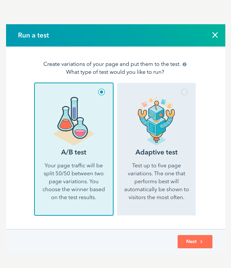 We don't need to tell you that conversion is important. Conversion optimization (CRO) is therefore a key activity for generating more leads and sales. For this reason, the HubSpot CMS (Professional and Enterprise) offers two testing options: an A/B test where traffic is split 50/50 between two variations of a page, or an adaptive test where you test up to five variations using Artificial Intelligence!
3. Drag-and-drop page building
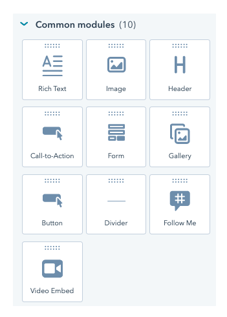 The drag-and-drop editor allows you to build pages without development. You can use predefined templates or adjust existing ones by adding content blocks, CTAs, or changing section order. This enables marketing teams to iterate independently while maintaining consistency through modular design.
4. Call-to-actions
CTAs are the foundation of your conversion flows. In HubSpot, you can easily create on-brand CTAs and track exactly which ones drive conversions. Combined with A/B or multivariate testing, you continuously optimize performance based on data.
5. Forms with progressive profiling
You want rich lead data, but every extra field reduces conversion. HubSpot solves this with progressive profiling. Known information is not requested again, and visitors only see fields that are still missing. This keeps conversion rates high without sacrificing data quality.
6. Blogs, landing pages, and website pages
HubSpot distinguishes between different page types. Blogs include built-in features like category pages, author pages, and overview pages. Landing pages are optimized for conversion and nurturing. Per page, you see exactly how many conversions, contacts, and customers it generated.
7. Responsive design
Your website needs to perform well on every device. HubSpot CMS supports responsive design by default, with full control for designers and developers over how content behaves across screen sizes.
8. Publication scheduling
Content marketing requires planning. HubSpot allows you to schedule pages and blogs in advance and publish them automatically at the right moment.
9. Content staging
A redesign or new website often means repetitive work. Content staging simplifies this by letting you build new pages in a staging environment, link them to existing pages, and publish everything at once. This saves time and reduces errors.
10. Multilingual support
HubSpot supports multilingual websites by allowing you to easily create and link pages in multiple languages, supported by AI. Visitors can switch languages seamlessly while your SEO structure remains intact.
11. SEO features
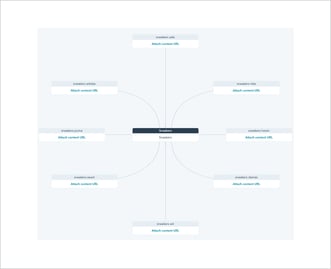 HubSpot CMS includes built-in SEO tooling with AI-powered recommendations per page. You can also work strategically with topic clusters, mapping core topics and subtopics visually. This helps you build topical authority, not just individual pages.
HubSpot CMS vs WordPress: what is the difference?
WordPress is flexible and widely used, but often requires ongoing management and additional tools. HubSpot CMS is built for teams that prioritize speed, integration, and scalability. The main difference is not what is possible, but how much effort it takes to manage.
WordPress:
- Often depends on plugins
- Ongoing updates and security management
- CRM and automation integrations are usually external
- High flexibility, but also high maintenance
HubSpot CMS:
- One platform for website, CRM, and marketing
- Hosting, security, and updates are included
- Personalization and automation are built in
- Designed for teams focused on conversion and growth
For a detailed comparison including costs and maintenance, read: HubSpot CMS vs WordPress.
Building a HubSpot website in practice
You can build a HubSpot website using a standard theme or a custom setup. The right choice depends on your ambitions and how unique your design and functionality need to be.
Step 1: Define structure and goals
A strong HubSpot website starts with clear objectives such as demand generation, demo requests, onboarding, recruitment, service, or partner acquisition.
Step 2: Design system and modules
You work with reusable modules so your team can build pages independently later, without turning every new page into a separate project.
Step 3: Content migration and optimization
Migrating from another CMS like WordPress is the perfect moment to audit content, improve SEO, and optimize conversion flows.
Step 4: Go live and iterate
After launch, the real work begins. Measuring, testing, and improving is easier because all data lives in one platform.

HubSpot CMS training: full control for your team
Want your team to build, optimize, and manage pages without relying on developers or agencies? A HubSpot CMS training is often the fastest route to independence.
A solid training covers topics like:
- Working with themes, templates, and modules
- Building pages and landing pages using best practices
- Improving SEO and performance
- Increasing conversion with CTAs, forms, and smart content
- Governance and scalability for multi-user teams
Want to become a HubSpot CMS expert?
→ Read more about HubSpot CMS training.
HubSpot CMS pricing
HubSpot CMS pricing depends on the Content Hub license you choose. HubSpot works with different tiers based on functionality and scale.
In practice, most organizations fall into one of these scenarios:
- Using HubSpot CMS as part of a broader HubSpot setup
- Choosing Content Hub due to high content volume and scalability needs
- Starting with CMS and expanding to other hubs later
Important: look beyond license costs. With WordPress, expenses are spread across hosting, plugins, maintenance, security, and development. HubSpot includes many of these by default, which often results in a more predictable total cost of ownership.
Want a price indication based on your situation? Plan a free website audit or get in touch.

HubSpot website cases: real-world results
A HubSpot CMS website is not built just for design. The goal is growth. Better conversion, higher lead quality, stronger alignment between marketing and sales, and a scalable platform your team can manage independently.
At Bright Digital, we have built dozens of HubSpot websites for mid-sized organizations and scale-ups across multiple industries. Our cases show exactly how we approach projects, which choices we make, and what results they deliver.
Common elements in our HubSpot website cases include:
- Modular design systems for marketing autonomy
- Smart conversion flows with forms, CTAs, and progressive profiling
- Multilingual and international structures (without SEO issues)
- CRM and system integrations for a complete customer view
- Ongoing optimization after launch using (CRO and SEO) data
→ View our HubSpot website cases.
Frequently asked questions about HubSpot CMS
1. Is HubSpot CMS suitable for SEO?
Yes. HubSpot CMS offers strong SEO tooling and benefits from combining marketing, content, and data. It focuses not just on visibility, but also on conversion and pipeline impact.
2. What is the advantage of HubSpot CMS over WordPress?
WordPress is flexible but often relies on plugins, maintenance, and manual security updates. HubSpot CMS is an integrated platform with hosting, security, and CRM integration included.
3. Can I migrate my WordPress site to HubSpot?
Yes. Migration is very feasible and often the perfect moment to improve content and structure. Complexity depends on page volume, custom templates, and integrations.
4. Is HubSpot CMS secure?
Yes. Hosting, security, updates, and monitoring are handled by HubSpot, which is a major advantage over plugin-dependent CMS platforms.
5. Is HubSpot CMS suitable for B2B websites?
Absolutely. B2B organizations benefit greatly from CRM integration, automation, and personalization, enabling more targeted content and conversion flows.
6. Do I need developers for HubSpot CMS?
Not for daily content changes. For custom templates, advanced modules, or integrations, development support can be helpful. Many teams use a hybrid setup.
7. Is HubSpot CMS the same as Content Hub?
HubSpot CMS is the website solution. Content Hub is its evolution, offering additional content management and advanced features depending on your license.
8. Can I build a HubSpot website without developers?
For most content and page updates, yes. For custom design and integrations, a partner is often recommended.
9. Is HubSpot CMS suitable for multilingual websites?
Yes. You can easily create and link pages in multiple languages while maintaining a clean international SEO structure.
What does HubSpot CMS cost?
The cost depends on your license (Content Hub) and your ambitions. Don't just consider the license price, but also the overall package: with WordPress, hosting, plugins, maintenance, and development are often included as separate costs.
Conclusion: is HubSpot CMS the right choice?
If your website should be more than a digital brochure and actively contribute to growth, HubSpot CMS (Content Hub) is a strong choice. It combines speed for marketing, scalability for your organization, and data to continuously improve performance.
Want to discuss your situation or explore whether HubSpot CMS fits your goals?
Plan an introduction call with one of our specialists.